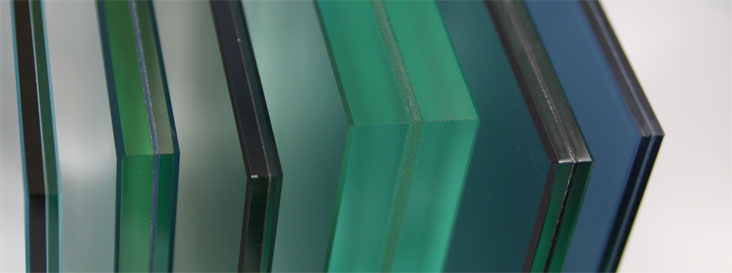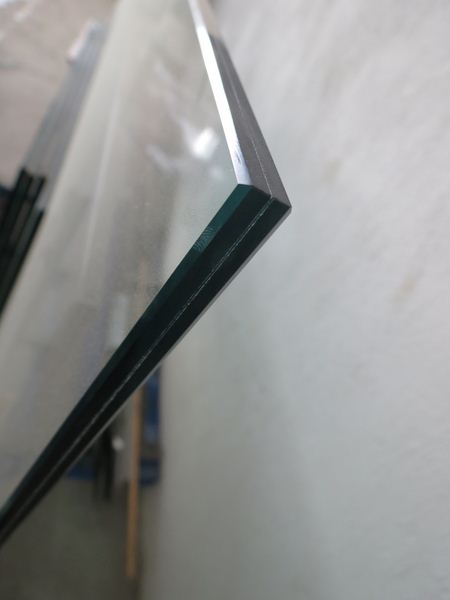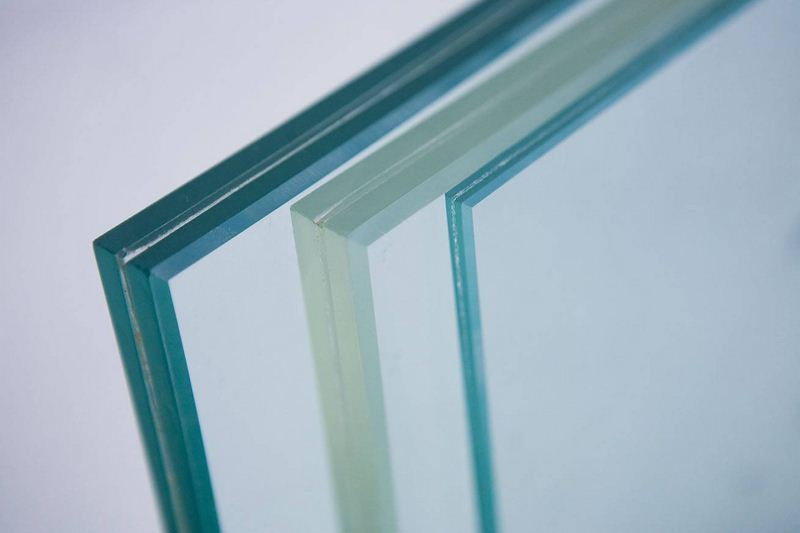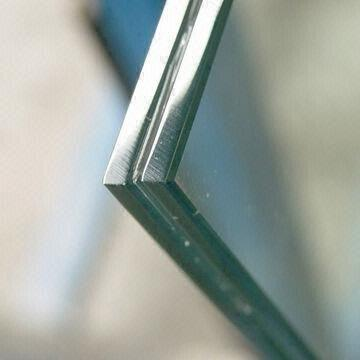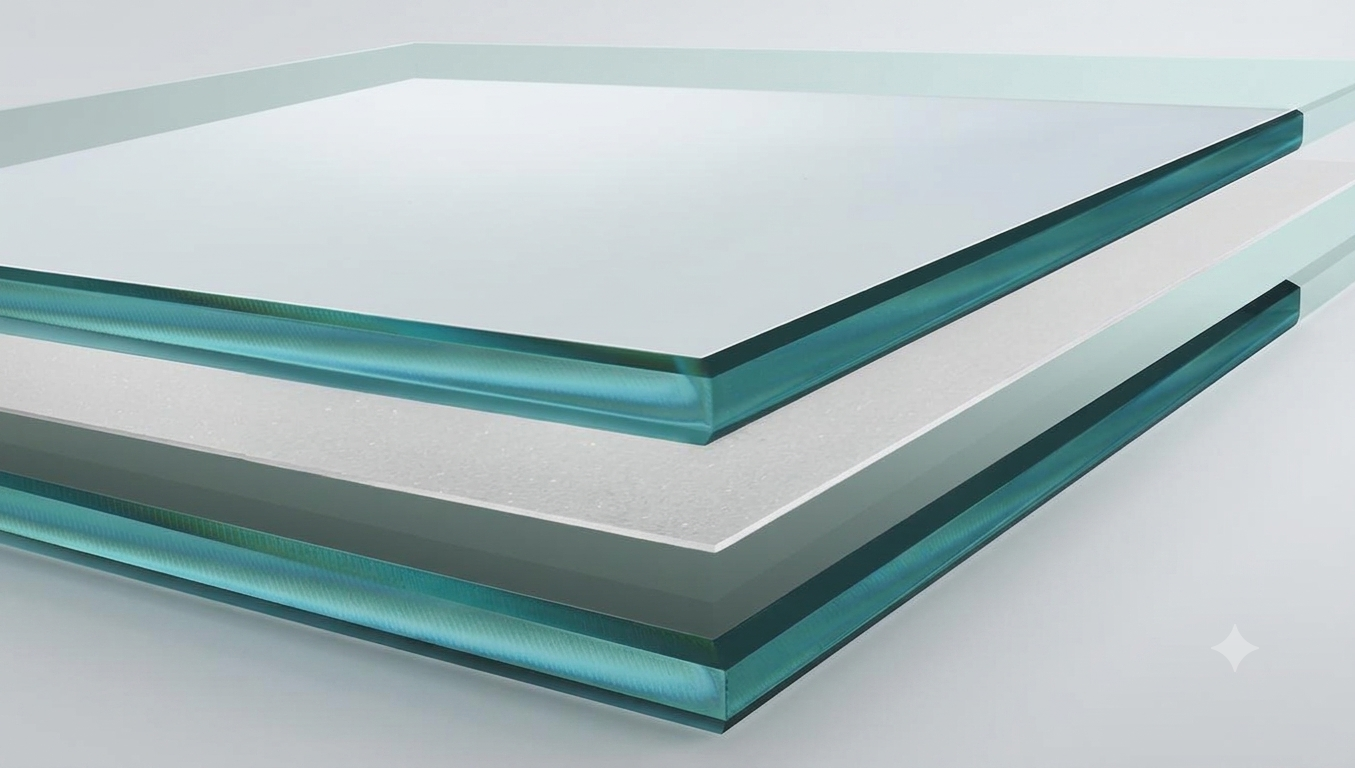
Laminated safety glasses are assembly of two or more panes of glass with one or more interlayers made of PVB (polyvinyl butyral) or EVA (ethyl vinyl acetate). If the glass is accidentally shattered, it adheres to the interlayers (in other words, the glazing stays in place).
The laminated assembly provides the glass product’s mechanical strength. Depending on the structure in question (number of glass sheets and interlayers), the assembly also ensures varying levels of safety and insulation. Laminated glass can be used in monolithic or insulating glazing.Laminated glass may be manufactured with heat strengthened or toughened glass to provide additional strength if required.
The layered nature of laminated glass means that it blocks more noise and UV light than single glass. It can also be made with Low E glass and used in Insulating Glass Units for increased environmental benefits.
Benefits and Applications
- Safety & Protection
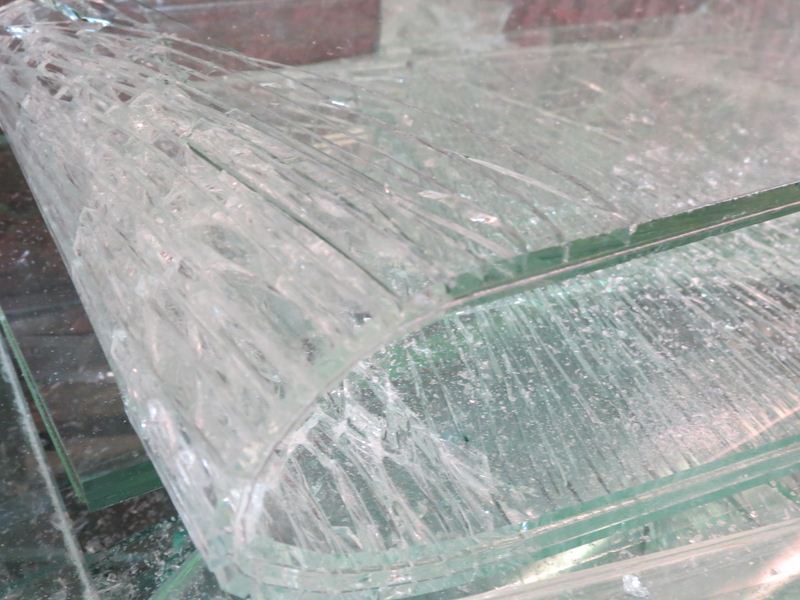
When subjected to impact, the bond between the glass and interlayer adhere any broken fragments, keeping the glass intact and resisting penetration.
This important breakage characteristic significantly reduces the likelihood of serious injury, qualifying laminated glass as a safety glass in accordance with European safety standards and other international standards. In addition, the glass will not fall out if used in sloped or overhead glazing applications providing environmental protection.
- Security
Laminated glass offers greater protection for people and property by providing an effective barrier from attack. Although the glass will break if hit with a hammer, brick or similar object, the interlayer can resist penetration, ensuring that any attempt to enter a premises will be slow and noisy.
In addition, the attacked glass will tend to remain in the opening, keeping wind and rain out of the building until it can be replaced at a convenient time. The type of laminated glass required will depend on the level of security required.
- Fading Control
Laminated glass products absorb the sun’s UV radiation while allowing important visible light to pass through. It therefore helps protect curtains, furnishings and carpets from fading caused by the damaging effects of short-wave ultra-violet radiation.
- Sound Control
Laminated glass is very effective in reducing the transmission of noise through glazing. This is achieved through the sound dampening properties of the interlayer, which will vary with the type and thickness of the interlayer.
- Climate Control
Laminated glass can have a tinted interlayer or be made with tinted or reflective glass to reduce glare and heat gain in a building. It can also be made with Low E glass or be processed into an IGU to reduce heat loss from the building and thus save on energy costs.
- Color and Light
Laminated glass can be made with a wide range of colored foil interlayer to provide special lighting effects. These colors can be combined with tinted and/or printed glass to provide special effects.
- Pictures and Images
New techniques allow interlayers to be printed with colored pictures or images before laminating to create special effects. - Visible Distortion
Due to the controlled nature of the laminating process, façades glazed with annealed laminated glass avoid the risk of visible distortions that are sometimes created by the heat treatment processes, providing significantly sharper visual transmission and reflections.
These benefits are however, dependent on the nature of the final processed product.
Applications
Laminated glass may be used in a range of applications:
- Safety glazing - Can be used in applications such as glazed building entrances, internal doors, overhead and roof glazing, swimming pools and windows in critical risk locations.
Security glazing - Protects from vandalism and burglary, it is also able to withstand repeated blows from heavy objects such as bricks, hammers or crowbars. Can be used in typical applications which display valuable goods, such as museums or in banks or building societies, as well as safety glazing in hospitals and prisons.
Resistance to manual attack-used for protection against vandalism.
Resistance against firearms - Provides penetration resistant from bullets fired from handguns, shotguns, modern high performance firearms and high velocity military rifles. Can be used in applications in high risk buildings such as banks, post offices, building societies, embassies, cash offices, military establishments and private residences.
Explosion resistance.
Floors and stairs.
Containment barriers.
Overhead glazing.
Sound control.
Assemblies
The base glasses and the type of interlayer used in the assembly determine the functions provided in addition to safety:
- Enhanced thermal insulation.
Solar control.
Decoration and design.
Acoustic insulation.