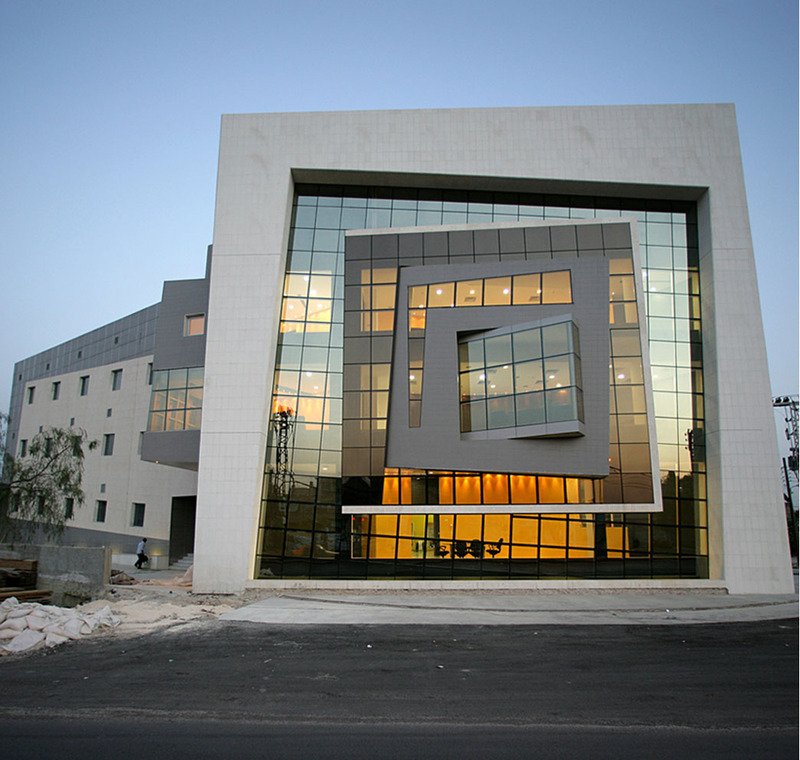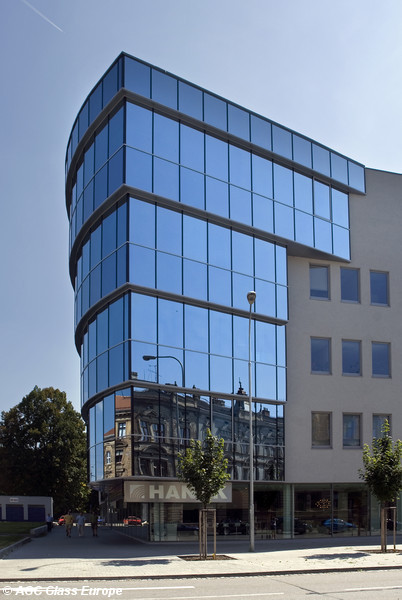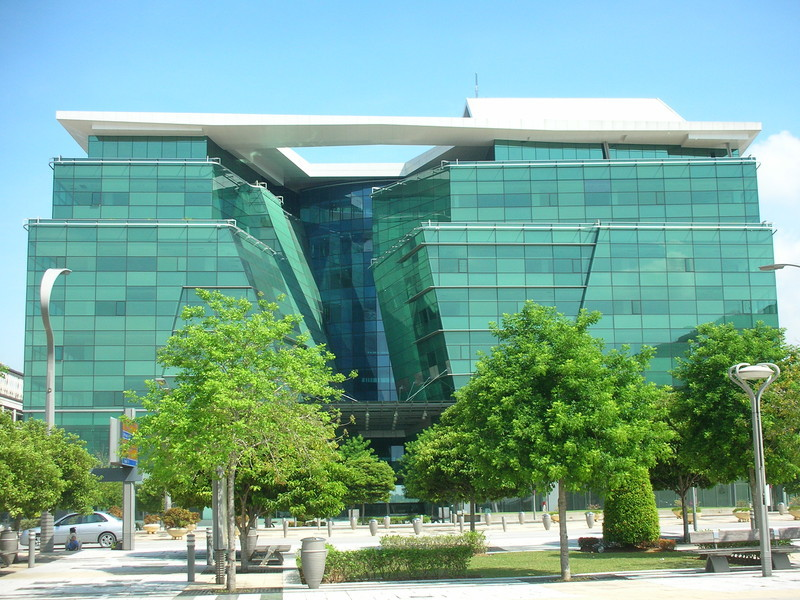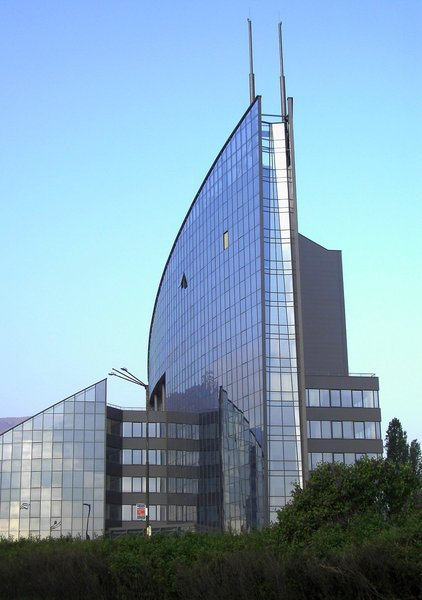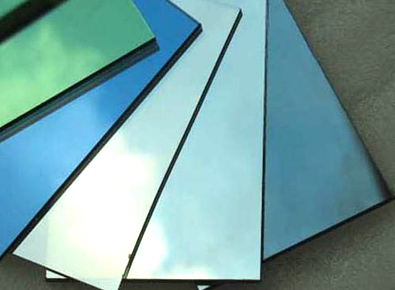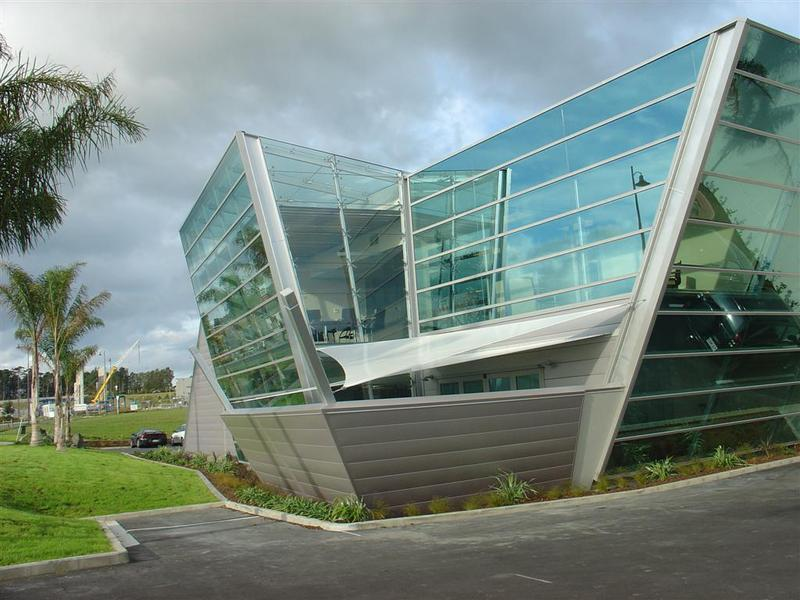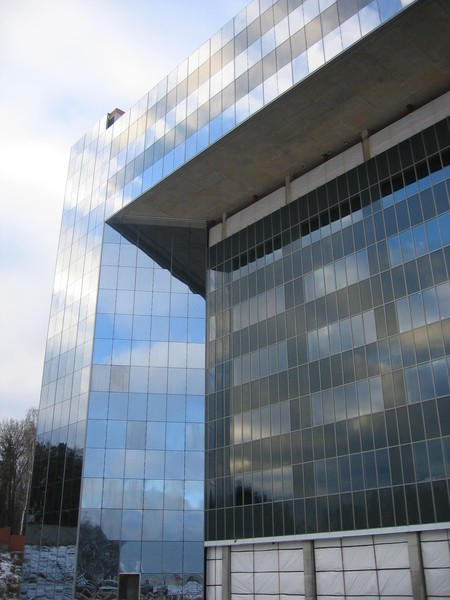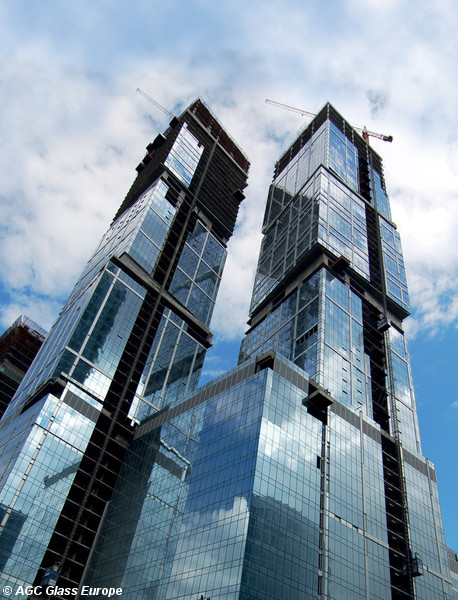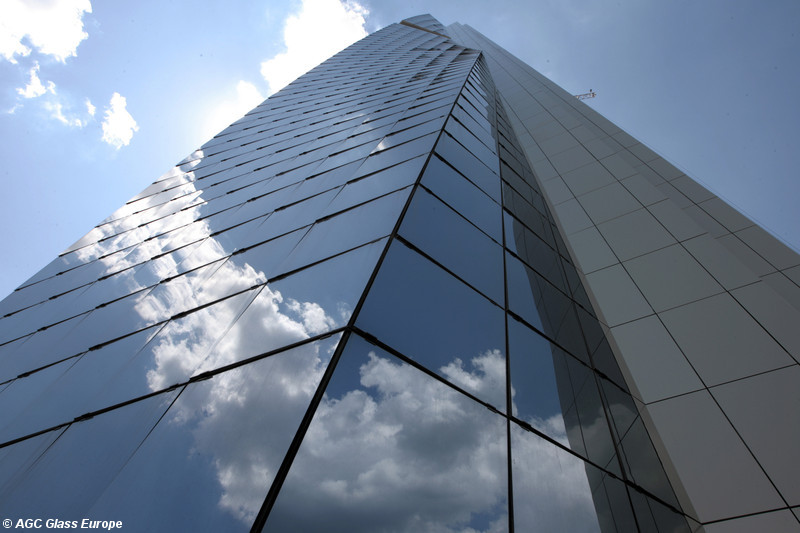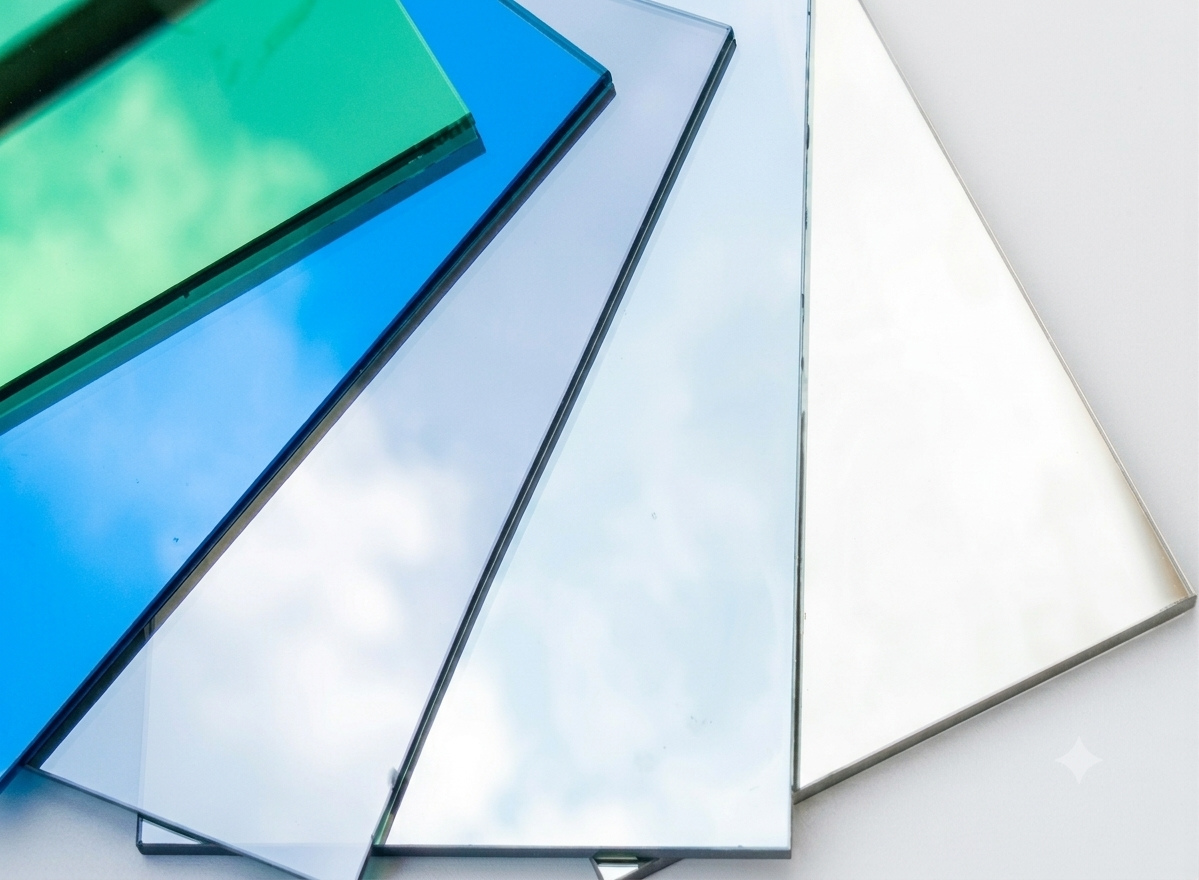
This is an ordinary float glass with a metallic coating to reduce solar heat. This special metallic coating also produces a mirror effect, preventing the subject from seeing through the glass. It is mainly used in façades.
There are two ways these glasses can be coated:
- On-line coated (pyrolitic process): in this process, semi-conducted metal oxides are directly applied to the glass during the float glass production while the glass is still hot in the annealing lehr.
- Off-line coated (magnetron process): in this process one or more coats of metal oxide are applied under a vacuum to finished glass. The coatings applied by this technique are soft and must be protected against external influences and are therefore used for the interior side of glass panes.
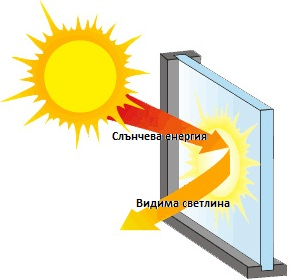
Traditional reflective glass has a mirror-like appearance and reflects and absorbs a major proportion of the sun’s direct short wave solar radiation. The degree of reflectivity is dependent on the type of coating and the orientation of the glass. The use of reflective glass is more popular in commercial glazing as it provides superior solar control performance to clear or tinted glass products, and thus improves the energy efficiency of the building.
Reflective coatings are used on solar control glass because they literally reflect light and heat away from the building. The use of tinted glass with reflective coatings further enhances the solar control properties of the glass.
Traditional high performance reflective coatings are high in reflectivity and low in light transmission, which can be an undesirable feature. Some modern coatings combine low reflectivity and Low E coatings to overcome some of these problems.
The Low E coatings work by reflecting more of the absorbed heat outward thus increasing performance.
Range:
Classic Clear
Classic Bronze
Classic Grey
Classic Green
SilverLight PrivaBlue
Supersilver Clear
Supersilver Grey
Supersilver Green
Supersilver Dark Blue